Logo

Logo
Showing posts with label Spain. Show all posts

Friday, 9 March 2012

March-Recipe-SPAIN

GAÑOTES
INGREDIENTS
-          6 eggs
-          1 and a half glasses of orange juice
-          Lemon scratching of 2 lemons
-          1 and a half glasses of oil
-          1 and a half glasses of sugar
-          1.5 kg of Flour (approximately)
-          Ground Cinnamon

INSTRUCTIONS
  • Beat the eggs, the orange juice, the oil, sugar, lemon scratching and the cinnamon together. Begin mixing the flour and sugar until they form a mouldable substance.
  • Using your hands make worm shapes of 15/20 cm in length, roll them into canes.
  • Fry in very hot oil.


 GAÑOTES
Ingredientes:
-          6 huevos.
-          1/2 vaso de zumo de naranjas.
-          Raspadura de 2 limones.
-          1/2 vaso de aceite.
-          ½ vaso de azúcar.
-          1.5 Kg de harina (aproximademente).

Elaboración
  • Batir los huevos, el zumo, el aceite, azúcar, raspadura, la canela. Ir mezclando la harina y azúcar hasta conseguir una masa moldeable.
  • Con las manos hacer “gusanos” de 15/20 cm de largo y enrollar en las cañas. Freir en aceite muy caliente.

Thursday, 8 March 2012

February Recipe-SPAIN

ALMONDS CAKE
INGREDIENTS.
-         2kg of almonds
-          2 kg of sugar.
-         2 tablespoons of oil.

UTENSILS:
-         Hammer.
-         A wooden spoon.
-         A large saucepan.
-         Tin foil
-         Baking tray.
-         Frying pan.

PREPARATION
-         Break the nut from the shell with the hammer
-         Peel the almonds
-         Fry the almonds in the frying pan and break them in small pieces.
-         Add and melt the sugar in a large saucepan.
-         Stir the sugar until it turns brown.
-         Add almonds and stir.
-         Add the olive oil to the tin foil in the bakin tray.
-         Put the mixture in the baking tray.
-         Let it cool until it is hard, then break into cluster.


ALMENDRADO

INGREDIENTES:
-         2 kg  de almendras.
-         2 kg de azúcar.
-         2 cucharadas soperas de aceite.

Utensilios:
-         Un martillo.
-         Una cuchara de madera.
-         Una olla grande.
-         Papel de aluminio.
-         Una bandeja de horno.
-         Una sartén.

PREPARACIÓN:
-         Quitar la cáscara de la almendra.
-         Pelar las amendras.
-         Freír las almendras en una sartén y partirlas en trozos pequeos.
-         Añadir y  mezclar el azúcar en un recipiente.
-         Remover el azúcar hasta que esté morena.
-         Añadir las almendras y remover.
-         Poner aceite de oliva sobre el papel de aluminio en una bandeja de horno y verter la mezcla.
-         Esperar a que enfríe totalmente y trocear.

Saturday, 7 January 2012

Roscón de reyes - KING CAKE

”Roscón de Reyes” consumption takes place on January 6th, the day of the Adoration of the Three Wise Kings, and on which traditionally Christmas gifts are exchanged. It consists of a large doughnut in the form of wheel, decorated with little pieces of frosted fruits. The tradition is that the cake must contain some type of surprise or gift hidden in the doughnut. .

Sunday, 1 January 2012

Happy New Year and the three Wise Men.

Just a break in our way of recipes to wish you A HEALTHY AND FELIZ AÑO NUEVO 2012


new year scraps


We would like to tell you about how we celebrate The Three Wise Men Day.

On 5 January we celebrate the end of Christmas with a great party where everybody gives and receives presents. We celebrate the arrival of the Three Wise Men - Melchior, Caspar and Balthazar - to the city where Jesus was born. In the same way that the Three Wise Men gave gifts to baby Christ,  they share out presents amongst children around Spain. In fact; they are more popular than Santa Claus.


But because we are on holidays at school when they normally come around us, they visited our school before Christmas Holidays, children give them their letter with their wishes and the Wise Men gave them some sweets and stayed with us some hours.


Our parents associatiation organized the event.


Tuesday, 20 December 2011


These Christmas cards were drawn by a mother of our School Parents Association "El Guindo", specially for all the people who  collaborate in our Comenius project.Thank you Ana Gema.

Wednesday, 23 November 2011

ACEITUNAS SAJADAS-SCORING OLIVES- SPAIN

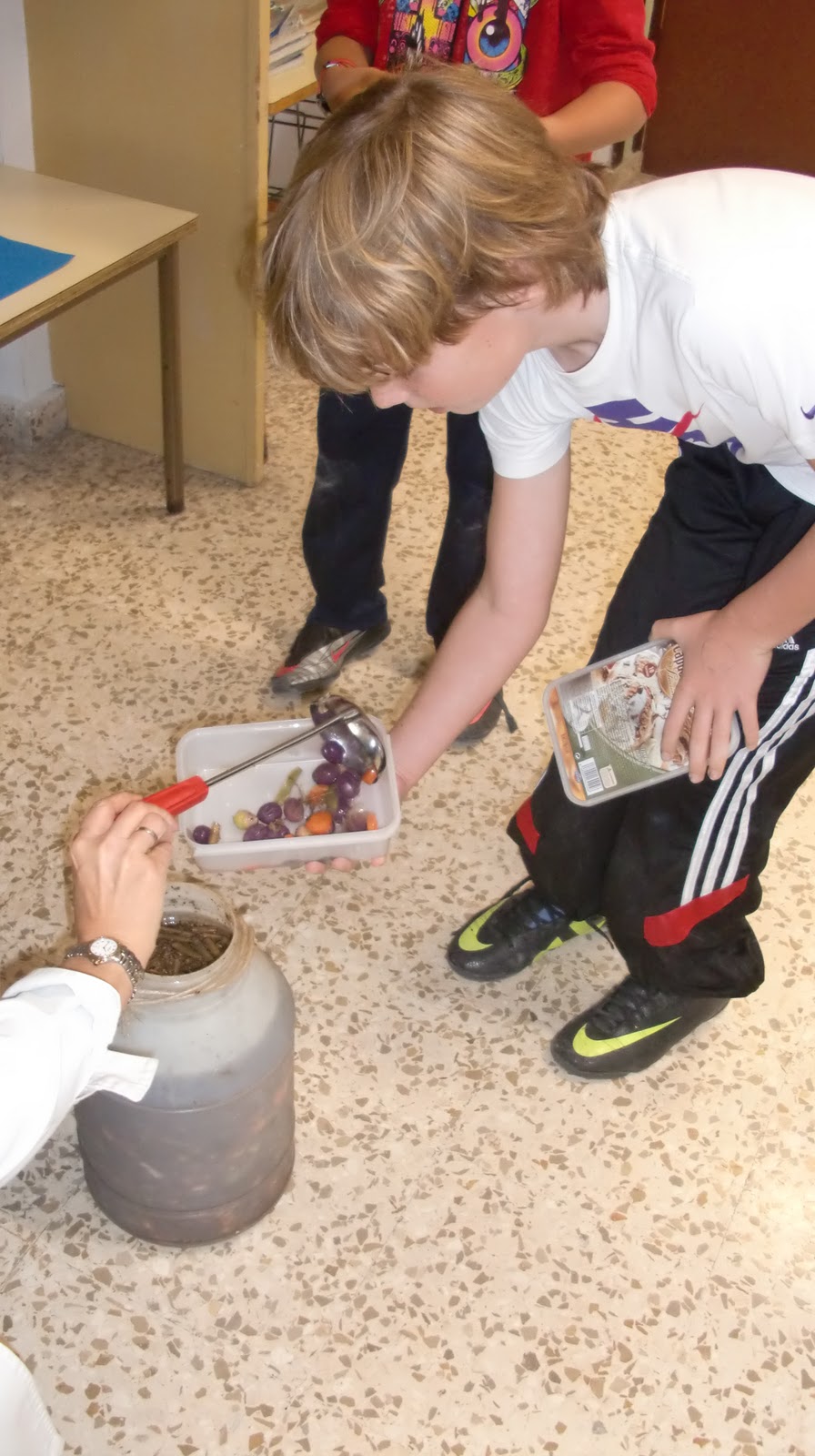
Before cooking our Spanish recipe for Christmas we have prepared scoring olives with our pupils, a typical andalusian "tapa". 
We were recollecting the olives in our school garden, we have olives trees. After about two weeks the children prepared them, you can see in the photos how they are prepared.
Ingredients:
  • Ripe olive
  • Fennel
  • Thyme
  • Oregano
  • Garlic
  • Carrots
  • Peppers
  • Vinager
Instructions:
  •  Collect the ripe olives (when they are turning black) and score twice. Prepare the brine (to the point that a raw egg float in it) and leave the olives in the brine until they lose their bitterness. Roughly 15 days.
  • Crush the garlic, cut the pepper and the carrots and add the oregano, thyme and fennel.
  • Throw away the brine and replace it with unsalted water and mix all the ingredients addding the vinegar.
  • Leave it for a long time (roughly a week) so that the olives absorb the flavour of the sauce.
They are eaten as appetisers, in salads or as "tapas".


    Aceitunas sajadas
    Ingredientes
    *Aceitunas maduras.
    *Hinojos
    *Tomillo
    *Orégano
    *Ajos
    *Zanahorias
    *Pimientos
    *Vinagre
    Elaboración
    • Se recogen las aceitunas maduras (cuando van tomando el color negro) y se les realiza dos cortes. Se prepara la salmuera (estará en su punto cuando un huevo crudo flote en la disolución) y se dejan las aceitunas en la salmuera hasta que pierdan el amargor, aproximadamente unos 15 días.
    • Se trituran/machacan los ajos, se corta el pimiento y la zanahoria y se añade el orégano, el tomillo, el hinojo.
    • Se tira la salmuera y se sustituye por agua no salada y se mezcla con los ingredientes, añadiendo el vinagre.
    • Se deja el tiempo suficiente (aproximadamente una semana) para que las aceitunas vayan tomando el sabor del aliño.
    Se consumen como aperitivos, en ensaladas o “tapas”.


    Now our SCORING OLIVES are ready for eating. Children brought some home to share with their families.


    Sunday, 13 November 2011

    "Carne membrillo" A recipe from Spain. November

    Dulce de membrillo o Carne de membrillo (Se llama así en muchos sitios de Andalucía)

                Ingredientes: 
    • Membrillos
    •   Azúcar
     Preparación:
    Se ponen a cocer los membrillos en una olla cubiertos de agua durante una media hora. Cuando se han enfriado un poco, se pelan y se les quita el corazón, se va sacando la carne del membrillo. 

    Se pesa el membrillo cocido y se pasa por el “chino” o pasapurés; a continuación se pesa la carne de membrillo y se mezcla bien con la misma cantidad de azúcar. Se pone al fuego en una olla , y ya sólo se necesita un poquito de paciencia porque hay que mover con una cuchara de palo o “caña”; una vez que comienza a hervir se continúa alrededor de media hora a fuego medio, hasta que pierde toda la humedad y tiene la consistencia adecuada. Se pone en moldes  y se deja enfriar.

    Queda genial servido con algún queso, una lonchita de queso y otra de carne de membrillo es un bocado irresistible. 

    (Hemor recogido los membrillos en el huerto de nuestro colegio y lo hemos preparado entre todos)
    Gracias Carmen por ayudarnos a preparar esta rica receta.


    Spanish Recipe "Carne membrillo" on PhotoPeach 

    Quince Jelly
    Ingredients
    •   Quince Fruit
    • Sugar
    Directions
    • Boil the quince fruit in a covered pot for half an hour.  When they have cooled, peal off the skin and take out the core leaving only the flesh of the fruit.
    • Mash the cooked quince fruit with a “chino” or a potato masher; weigh the fruit and mix with the same quantity of sugar.  Put the mixture in a pot back onto the stovetop, and with a little patience continuously stir with a wooden spoon until it begins to boil. Then simmer on medium heat for about half an hour until all the moisture is gone and it has the consistency of jelly. Put in a mold/tin and let it cool.
    • The finished quince jelly goes great served with cheese. A slice of cheese and quince jelly makes for an irresistible sandwich.

    Wednesday, 9 November 2011

    Spain`s Recipe OCTOBER.


    Garlic Soup with Grapes

    Ingredients:
    • 200 grams blanched almonds.
    • white bread, crust removed 300 g.
    • 4 cloves of garlic.
    • 1 litre of cold water.
    • 200 ml of olive oil.
    • 50 ml vinegar.
    • salt.
    • water.
    • 250 muscatel grapes.

    BREAD-Pan                             ALMONDS- ALMENDRAS

              
      SALT- Sal               OIL-Aceite                  WATER-Agua             VINEGAR-Vinagre

    Preparation:
    1. Soak the bread in a little water, then squeeze dry.

    2. Blend the almonds, the peeled  garlic and soaked bread
    in a mixer,then slowly blend in the oil, followed by 1 litre of
    water.
    (in order to remove the skin of the almonds, scald them in
    boiling water).
     
    Traditional preparation: Place the almonds in the mortar together with the garlic cloves and a dash of salt, and mash well. Next, add the olive oil as you slowly grind and stir without pausing, until everything is well mixed and forms a white paste.

    3. Season with salt and a little vinegar 
    (Be careful that the ingredients do not separate)

    4. Serve cold, garnished with seeded or seedless grapes.
    (Cool water is added when served).

    GLOVES-Ajos / GRAPES                UVAS MOSCATEL

    Ajoblanco de Malaga

    Ingredientes:
    200 gr. de almendra sin tostar
    4 dientes de ajo
    1 litro de agua fresca
    300 gr. de miga de pan
    200 ml. de aceite de oliva virgen extra
    50 ml. de vinagre de vino blanco,
    una pizca de sal.

    Preparación:

    - Primero debemos poner a remojo el pan si está duro. Cuando esté blando, le quitamos la corteza y lo reservamos. 

    - Escaldamos las almendras y las pelamos.

    - Colocar en un vaso de batidora las almendras bien peladas y batirlas con los dos dientes de ajo y un poco de agua fría que tendremos en la nevera. Batimos bien, le añadimos la miga de pan, el aceite y el vinagre y seguimos batiendo. Finalmente acabamos de poner el agua necesaria, rectificamos de sal y dejamos enfriar en la nevera.

    La forma tradicional de elaboración del ajoblanco se hace majando en un mortero los ajos y las almendras con un poco de sal. Luego añadir el pan remojado y hacer una pasta a la que le vamos añadiendo el aceite para que ligue. Se le añade entonces el vinagre y finalmente el agua bien fresca.